
Digital Inbreeding Has Begun — And It Could Change How You Think About AI Forever
A story about history, human intelligence, and what really happens when machines learn only from machines.
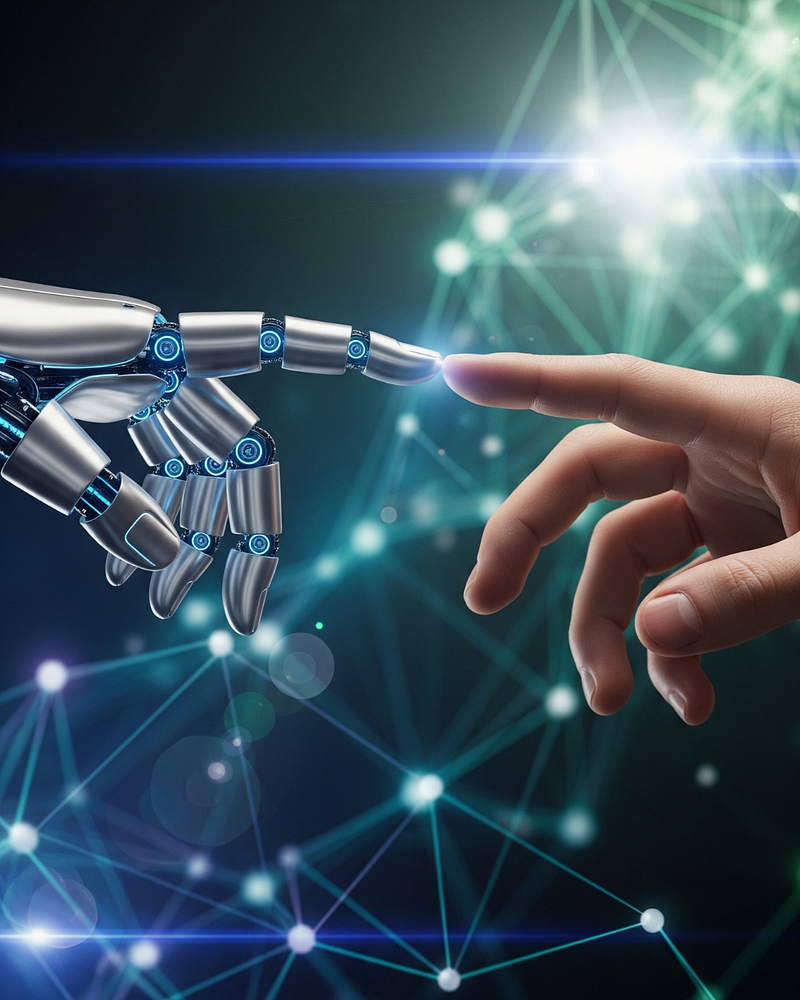
A story about history, human intelligence, and what really happens when machines learn only from machines.
I can still see the classroom. The white tables, the dusty sunlight pushing its way through the windows, and the slightley bored faces of teenagers pretending to care about something called the “Habsburg jaw”. It was history class, and we were learning about European royal families and their centuries-long habit of marrying each other. I remember our teacher laying out portrait after portrait. Kings, queens, dukes, all with that unmistakable sameness. The same eyes, the same bone structure and yes, the same jaw. It was a narrowing of variation, generation after generation.
It wasn’t the political theme that stayed with me, it was the biology lession hidden inside it: When a system feeds only itself, it becomes fragile. Variation disappears, resilience dries out and decline becomes inevitable.
Back than, I didn’t thing much more about it. It was simply one of those lessons that sinks into the back of your memory… until one day, years later, it resurfaces with clarity.
Now, watching what’s happening in the world of AI, I suddenly feel as if I’m back in that classroom, staring at those portraits again. The faces have changed, of course but the pattern hasn’t!
The moment I realized AI is becoming a closed loop
It happend gradually, almost so slowly I didn’t recognize it. More and more content online began to feel, well, familiar. Not familiar in a comforting way, but familiar in a slightly uncanny way. The same tone, the same structure and even the same rhythm. It was polished, almost interchangeable. whether it was a blog post, a LinkedIn update or a product description.
That was the point in time where it hit me: AI is learning from content created by earlier AI models. The models were trained on content by earlier versions of themselves. A recursive, narrowing loop, a digital echo chamber and yes, a form of inbreeding. Not with royal titles but for social media algorithms.
It’s the same mechanism I learned in that history class with the exeption that this time it’s happening with information, not DNA.
Why our brains don’t like this — and never will
Dave Snowden made his point: Human thinking is not tidy, sequential, daten-driven. It’s chaotic (well, in some humans more than it others 😉) and intuitive. It’s even sometimes beautifully irrational. Human thinking is abductive. We leap into what doesn’t exist yet and create connections no dataset could have predicted. Humans sense meaning, interpret context and responst to energy, tone, silence, risk, emotion and most importantly to things which were not spoken at all!
LLMs on the other hand, are inductive machines only. Using probabilities, they operate by remixing what already exists. No matter how impressive they become, they can’t take that step into the unknown — the one humans take every day when we imagine something that wasn’t there before.
So yes, the machine produces answers (even great ones) but only hu,ans produce possibility.
The second lesson from history that matters even more
Back in the classroom, somewhere between wars, treaties, and royal scandals, I absorbed a second truth — although I didn’t have the words for it then:
Every movement creates a counter-movement.
Push long enough in one direction, and humans will instinctively lean the other way. Overdo uniformity, and people start longing for difference. Flood the world with synthetic sameness, and you awake the hunger for the real.
This is exactly what I see emerging right now!
The more AI content flattens into smooth predictability, the more people seem to creave the depth of something unmistakably human. They don’t to read polished sentences, they want presence. Instead of convenience, they seek for connection. They have enough of continuing patterns and want the spark that appears in a room when two humans begin to thing, feel and create together.
When I coach, I see this counter-movement in action because transformation doesn’t come from a correct answer delivered instantly. It comes from the shared silience before a difficult truth lands. It comes from the emotional resonance of being really seen and heard. And it comes from a place where two perspectives collide which allows something new to emerge (something, no model could have predicted because it didn’t exist until the two of us created it).
These are abductive moments, they are human moments!
Why I’m not afraid of AI — but paying attention
Don’t get me wrong: I also use AI for specific tasks but I make a concious choice, not a comfortable one. Why? I don’t want myself to become so comfortable that I stop thinking. And additionally because the real risk is not that AI becomes more intelligent, the real risk is that systems — including human ones — become closed loops. Here again, history has shown us exactly where that leads to.
To stay positive: History has also shown that humans are stubbornly incapable of staying on those loops forever. They break out, they rebel. As humans we searh for contrast, texture, nuance and yes, imperfection! All those things remind us, that we’re alive.
So yes, the digital inbreeding has begun but so has the counter-movement! People are seeking human depth again. Humans who really want to grow and transform, they crave real conversations, emotional resonance and the messy, meaningful spaces where something new can emerge. And that — more than anything — gives me hope that we all will perfectly be able to face the future.
About the Author
Brigitte Pfeifer-Schmöller is Managing Partner of Product Leaders, where she develops leaders in digital product organizations — through certified product leadership programs (CPL-1®), coaching, and her specialty: conflict work, from diagnostics to business mediation. ICF PCC · EMCC SP.
→ Read more at productleaders.com | Connect with her on LinkedIn