
The Clarity of Distance: Seeing What We Miss Up Close
Why stepping back — from our teams, our habits, and even ourselves — is the only way to see what’s really there.
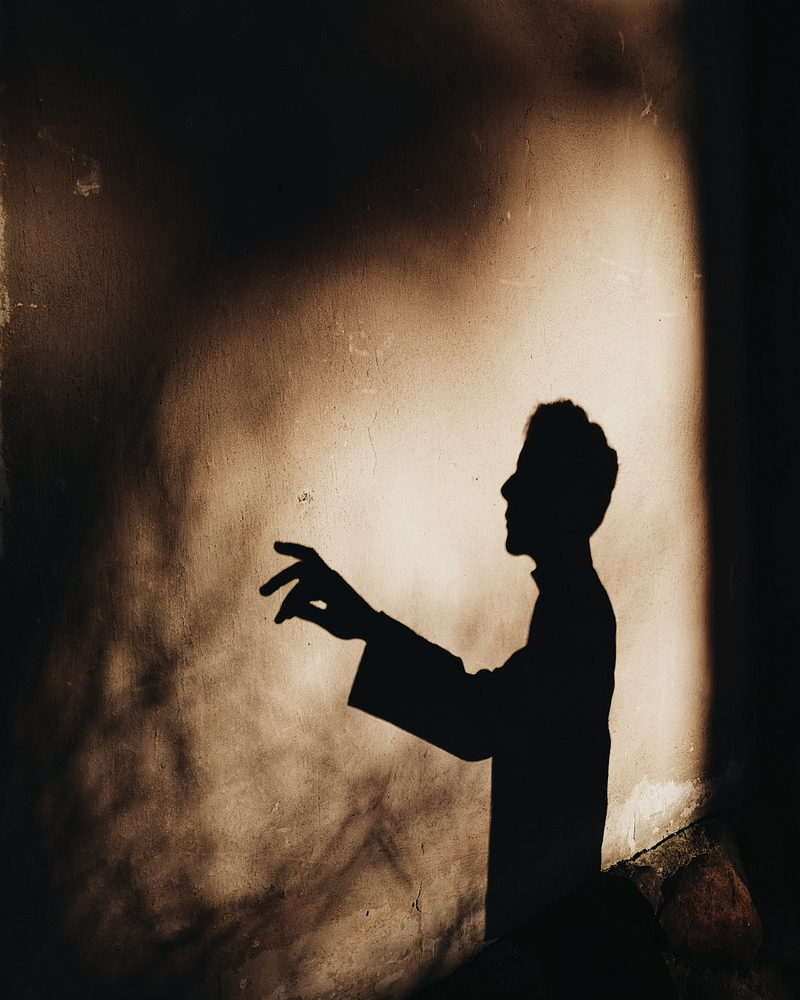
Why stepping back — from our teams, our habits, and even ourselves — is the only way to see what’s really there.
TL;DR:
When we stay too close to our daily realities, we start mistaking shadows for truth. Distance — whether through reflection, feedback, or coaching — helps us see what proximity hides. As coaches, our ethical task is to offer clarity without projecting our own shadows, showing up with both presence and solid coaching competence. True service begins when we, too, step back to see ourselves more clearly.
I often find myself in conversations where people carefully explain to me why things are the way they are.
“This is just how it works here,” they say.
“Our context is different.”
“It’s always been like this.”
And I listen — because these explanations matter. They tell the story of how people have come to see their world. But they also reveal something else: how hard it is to imagine that the world could be any different.
When you’ve spent too much time inside the same walls, your eyes adjust to the dim light. You begin to mistake the shadows for the real thing.
Plato wrote about that long ago — his Allegory of the Cave. A group of people live chained inside a cave, facing a wall. Behind them, a fire burns, and figures move between the fire and the wall, casting shadows. Over time, the prisoners take those shadows for reality because they have never seen anything else.
It’s an old story, but one that feels remarkably modern.
Every organization I’ve worked with has its own cave — its rules, its rituals, its language. The longer you stay inside, the more natural it feels. The more you explain to yourself why things can’t be different.
The paradox is this: proximity conceals. Distance reveals.
When you’re deeply immersed, everything makes sense — even the dysfunction.
Processes become invisible, assumptions turn into facts, and small absurdities harden into normality. People start defending what they once questioned, not because they truly believe in it, but because it’s familiar and safe.
That’s why stepping outside — even briefly — changes everything.
The moment you gain distance, you start to see.
You see how often the urgent overshadows the important.
You see meetings that drain energy instead of creating momentum.
You see decisions that were made long ago but never revisited.
You see how people adapt to structures that no longer serve them.
It’s not judgment that comes with distance — it’s clarity.
And clarity is uncomfortable. Because the light always hurts your eyes at first.
You start to notice what you’ve ignored. You realize how many “truths” were just shadows on the wall.
But once you’ve seen the difference, you can’t unsee it.
That’s the quiet gift of distance: it recalibrates your perception.
You don’t need to leave your organization to get it.
Sometimes it’s enough to pause, to ask an outsider to reflect with you, to spend time in spaces where no one knows your internal politics or past decisions.
Because from afar, the patterns become visible.
In coaching, I’ve seen it again and again: the moment someone steps back — even mentally — their language changes.
They shift from defending the past to imagining what could be.
From “this is just how we do things” to “what if we tried something else?”
Distance doesn’t disconnect you — it reconnects you to purpose.
And this is also why, in professional coaching, we value ethics so deeply.
Because when we show up as coaches, we’re not there to replace one shadow with another. Our role is not to project our own biases or beliefs — our own shadows — onto the client or the system.
As coaches, we hold space. We illuminate, but we don’t cast our own fire.
When we show up as consultants, we bring expertise.
When we show up as mentors, we bring experience.
When we show up as coaches, we bring presence, grounded in solid coaching competence.
Being aware of how we show up — and making that transparent — is an ethical cornerstone of our work.
You don’t want to swap the shadow of an organization for your own.
That’s why good coaches need distance, too.
To zoom out. To see themselves. To reflect on what they bring into the room.
It’s exhausting work — the constant awareness, reflection, calibration.
And that’s also why I believe that every good coach needs a coach.
Not as a luxury, but as a necessity — to serve their clients with integrity and clarity.
Because in the end, the same truth applies to all of us:
sometimes, the only way to see clearly is to step back —
and let the light reveal what’s been there all along.
About the Author
Brigitte Pfeifer-Schmöller is Managing Partner of Product Leaders, where she develops leaders in digital product organizations — through certified product leadership programs (CPL-1®), coaching, and her specialty: conflict work, from diagnostics to business mediation. ICF PCC · EMCC SP.
→ Read more at productleaders.com | Connect with her on LinkedIn